

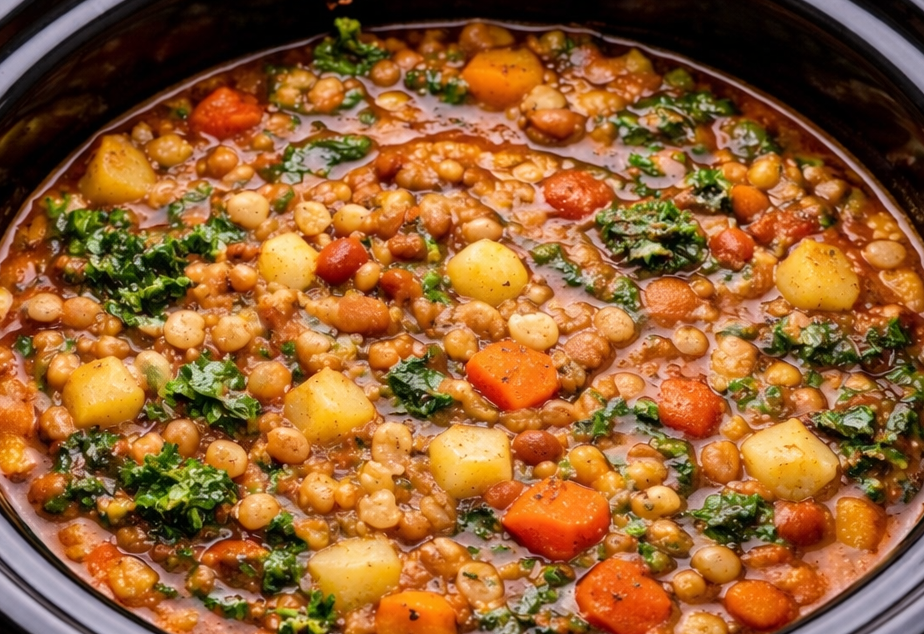
 By
By Slow cookers get a strange reputation in vegan cooking.
Some people see them as the easiest way to cook.
Others think crockpot recipes are just a shortcut.
I used to think they were simply throw-everything-in meals.
A few vegetables.
Some canned beans.
Tomatoes.
Spices.
Turn it on and hope for the best.
But most of the time, the results were disappointing.
Vegetables turned soft in the wrong way.
Beans sometimes split apart.
The broth tasted thin instead of rich.
After enough experiments, I realized something important.
The slow cooker was never the problem.
The real issue was how the cooking process was being used.
What Slow Cooking Actually Does
A crockpot works very differently from stovetop cooking.
Instead of high heat and fast evaporation, it uses gentle, steady warmth over a long period of time.
This slow process allows flavors to gradually develop.
Spices release their oils slowly.
Vegetables soften while releasing natural sweetness.
Beans cook evenly without constant stirring.
But slow cooking also requires timing and structure.
Certain ingredients benefit from hours of heat.
Others should be added much later.
Once you understand that balance, vegan crockpot meals become incredibly satisfying.
A Simple Crockpot Base You Can Build From
Instead of following a strict recipe every time, it helps to start with a flexible structure.
This base works for many plant-based slow cooker meals.
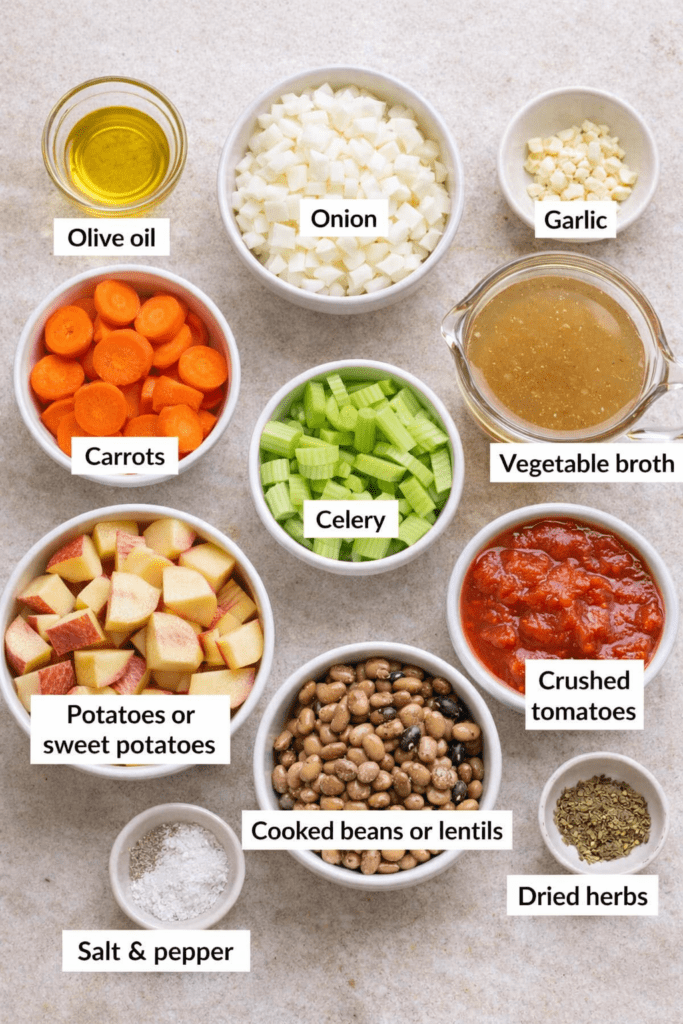
Serves 4–6
Think of this as a foundation, not a finished recipe.
From here you can create dozens of different meals.
How to Build Flavor in a Crockpot
For deeper flavor, start by sautéing the onion and garlic in olive oil before adding them to the slow cooker. This small step makes a big difference.
Place the firm vegetables, beans, broth, tomatoes, and herbs in the crockpot.
Stir once and cover.
Cook on low for 6–8 hours or high for 3–4 hours.
In the last half hour, taste and adjust seasoning.
This is also the moment to add delicate ingredients such as spinach, kale, peas, or fresh herbs.
Finally, finish the dish with a splash of lemon juice or vinegar to brighten the flavor.
That final step often transforms the whole dish.
Managing Texture While Slow Cooking
Texture is one of the most important parts of crockpot meals.
If the stew becomes watery, remove the lid during the final stage so some liquid evaporates.
If the mixture feels too thick, simply add warm broth and stir.
Beans splitting usually means the heat was too high or cooking time too long.
Vegetables becoming mushy often happens when they are chopped too small.
Large pieces generally hold their texture better during long cooking.
Meals You Can Make With This Method
Once you understand the structure, you can easily change flavors and ingredients.
Some of my favorite combinations include:
Chickpea spinach curry
White bean rosemary stew
Lentil sweet potato chili
Mushroom barley soup
Black bean taco filling
The base technique stays the same.
Only the spices and vegetables change.
That flexibility is what makes vegan crockpot cooking so practical.
Common Mistakes With Slow Cookers
Several small mistakes can affect the final result.
Adding delicate vegetables too early can make them overly soft.
Filling the pot too full prevents proper heat circulation.
Under-seasoning early in cooking leads to bland flavor later.
Adding acidic ingredients too soon can slow the cooking process.
Slow cookers concentrate flavor, so balance matters.
Storage and Reheating
Crockpot meals are perfect for leftovers.
Let the food cool completely before storing.
It will stay fresh in the refrigerator for about four days.
Many stews and chilis also freeze well for up to two months.
When reheating, add a small splash of broth to restore the original texture.
In fact, many slow cooker meals taste even better the next day.
Final Thoughts
A slow cooker is not just about convenience.
Used properly, it becomes a powerful cooking tool.
Gentle heat allows plant-based ingredients to develop deeper flavor and better texture over time.
The key is simple.
Start with structure.
Layer ingredients thoughtfully.
Adjust seasoning at the end.
When those steps come together, vegan crockpot recipes stop feeling like shortcuts.
They become comforting, satisfying meals that fit perfectly into real life.